ALL Electric
In the full review (20 sections)
- Should you buy one?
- Quick specs
- Who it’s for
- Who should look elsewhere
- Unboxing and assembly
- Controls and display
- The ride test
- Range: 41 miles on PAS 5
- Motor and speed
- Gearing and drivetrain
- Brakes and lights
- Weather and water
- Fenders, racks and looks
- Aventure vs Aventure 3
- Other bikes to compare
- Pros and cons
- FAQ
- Price
- Final thoughts
- Related reviews and guides
Should you buy one?
Buy the original Aventure if you find a fairly priced used one and you want a fat tire bike that handles dirt trails and pavement equally well. When I filmed this review, it was the best e-bike I had tested. On the highest pedal assist level, over a hilly route with plenty of dirt, it went 41 miles.
Skip it if you need to lift your bike often, or if you want to buy new. It weighs 73 lbs. Aventon doesn’t sell it anymore: as of Oct 22, 2026, the old product link redirects to the Aventure 3.
The deciding factors: the used asking price, and whether you need a warranty. If you do, buy the Aventure 3.
Want the current version? The original is discontinued. Check the Aventure 3 at Aventon (affiliate link).
Quick specs
| Spec | Aventure (1st gen) |
|---|---|
| Motor, sustained (W) | 750 |
| Motor, peak (W) | 1,130 |
| Battery (V) | 48 |
| Battery (Ah) | 15 |
| Battery (Wh) | 720 |
| Rated average range (mi) | 45 |
| My range result, PAS 5 (mi) | 41 |
| Charger (A) | 3 |
| Charge time (h) | 4-5 |
| Pedal assist levels | 5 |
| Rear gears | 8 |
| Cassette (T) | 12-32 |
| Chainring (T) | 46 |
| Brake rotors (mm) | 180 |
| Fork travel (mm) | 80 |
| Tires (in) | 26 x 4 |
| Weight (lbs) | 73 |
| Payload (lbs) | 300 |
| Rider height (ft/in) | 5’1”-6’4” |
| Frame sizes | 3 |
| Launch price (USD) | 1,999 |
Sources: Aventon’s archived 2021 Aventure product page for every row except my range result, which comes from my own test in the video. The brakes are hydraulic, the fork has a lockout, the water rating is IPX4, and Aventon sold it as Class 2 with a Class 3 pedal assist setting.
Who it’s for
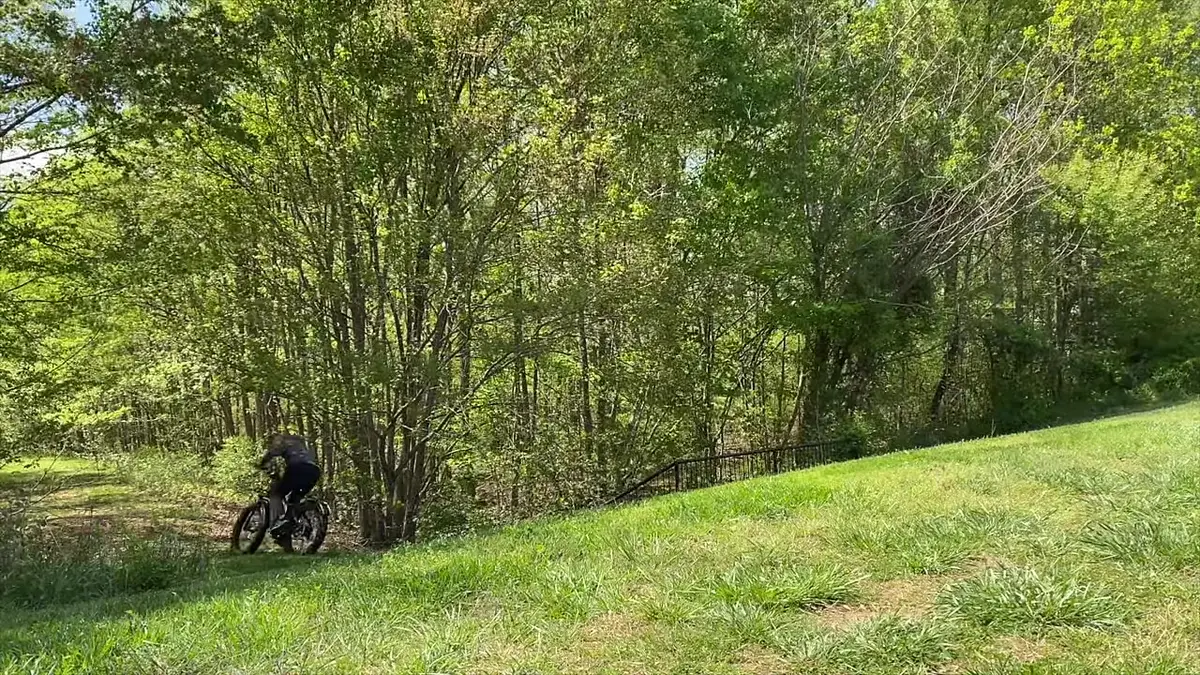
- Riders who split their time between dirt and street. I rode several dirt trails and never missed having a rear shock. On the way home it was just as comfortable on pavement.
- Commuters who need to charge at work. The battery is removable, so you can carry it inside and plug it in at your desk.
- People who don’t want to buy extras. Mine came with front and rear fenders, a rear rack, a headlight and a tail light, so there was nothing to add. Read the note on racks below before you count on that.
Who should look elsewhere
- Anyone who has to carry the bike. It rides lighter than it is. You still have to lift 73 lbs onto a hitch rack or up a flight of stairs.
- Very short riders. Aventon’s smallest size started at 5’1”. A viewer asked about fitting someone 4’11”, and that’s under the published range.
- Buyers who want new, under warranty. Look at the Aventure 3 instead.
- Riders who need hard numbers on braking or hill speed. I didn’t run a stopping distance test or time a climb on this bike, so this review can’t give you those.
Unboxing and assembly
Aventon sent me this bike for the review. Nobody paid me to say anything about it, and the opinions here are mine.
Assembly is where I made my first mistake. I didn’t go to Aventon’s website before I started, and putting it together was quite challenging. As soon as I did check the site, I found a complete tutorial showing how to put the bike together. Aventon made it easy. I just didn’t look. Watch that video first and you’ll save yourself the trouble I had.
Once it was built, the first thing I noticed was the parts. Aventon uses high quality components on every bike of theirs I’ve tested, and I’ve tested a lot of e-bikes. The shifters, grips and display on this one all felt the same way. A fair point from the comments: I called the parts premium without listing them in the video. Here’s what Aventon’s spec page lists, so you can judge for yourself:
- Hydraulic disc brakes with 180mm rotors
- An 8-speed drivetrain, 12-32T cassette and 46T chainring
- An 80mm suspension fork with lockout
- 26 x 4 inch fat tires
- An aluminum alloy frame
Controls and display
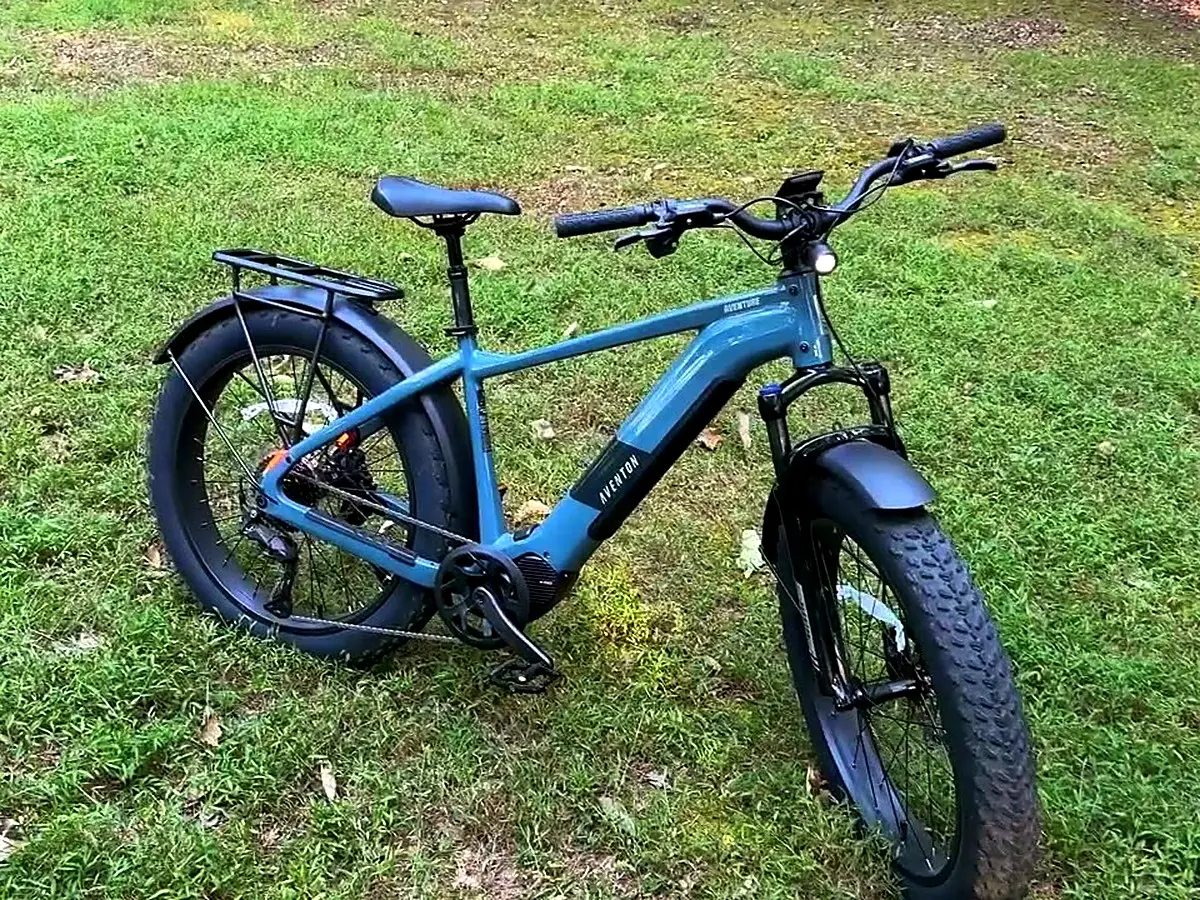
The battery sits inside the frame, which I think is a genius piece of design. It looks like part of the bike rather than a box strapped to it. To turn everything on, press the button on the battery, then hold down the power button. The full color display lights up, and it looks great.
Right-hand control. This is where you set pedal assist. It goes from 0, which is no assist at all, up to 5, the highest level. There are five assist levels in total, and you step through them with the buttons.
Light switch. One switch turns on the headlight and the tail light together.
Throttle. The throttle works from a complete stop. Several of you asked about this because some older Aventons needed you to pedal first. On this bike you can start on the throttle alone.
Display settings. You can change the screen brightness from the display, and there’s a connected app if you want it. The feature I liked most was that you can change the speed limit right from the center display, so you aren’t throttled at a speed you don’t want. One viewer said neither of their Aventures showed that option on the display, and they had to pair the Aventon app to change it. It may depend on the unit, so if you’re buying used, check where yours has it.
The ride test
I rode the Aventure on pavement and on several dirt trails. Here’s how it did on each.
Dirt trails and rocks
On dirt I left the fork open. It’s fully adjustable, so you can run it open or locked, and open it felt very stable. I never missed a rear shock. The 26 x 4 inch tires were the biggest reason. Going over rocks, they gave me a lot of support, and the ride never felt too bumpy. That much air in the tire acts like extra suspension, and it really adds to how this bike rides.
A commenter disagreed and said the shock is weak and the bike is better on roads and paths than real off-roading. I rode dirt trails, not technical mountain bike terrain with drops. If that’s your plan, a bike with a longer travel fork and a rear shock is the safer pick.
Street and pavement
On the street it was just as comfortable. Lock the fork out on pavement so the front end doesn’t bob when you push hard on the pedals. The fat tires still soak up cracks and rough patches. The way it handles both surfaces is why I called it an off-road commuter.
Hills
My range test route included climbs, and the bike handled them on PAS 5. I didn’t time a climb or measure grade on this bike, so I can’t give you a number for hill speed.
Weight on the road
At 73 lbs, it doesn’t feel that heavy once you’re riding. The aluminum frame keeps it about as light as a full-size fat tire e-bike can be. The weight matters when you stop riding. Lifting it onto a car rack or a truck bed is a real job. One viewer planned to put it on a tonneau cover rack and worried about that, and I’d share the concern.
Range: 41 miles on PAS 5
I test maximum range on every e-bike I review. For this one I stayed on pedal assist level 5, the highest setting, and I chose a route with uphills and a lot of off-road riding. Both add friction and drain the battery faster. I got 41 miles.
Aventon’s website listed a 45 mile average. I came in 4 miles short while working the bike about as hard as you can, so I don’t think 41 on level 5 is bad at all for a full-size fat tire bike.
Some of you pushed back hard on this. One viewer got 24 miles on PAS 5. Another said other reviewers saw 20 to 25 miles on PAS 5. I can only report what my bike did on my route with me riding it. I’m 6’1” and about 200 lbs. I didn’t record elevation gain or average speed for that test, which a viewer asked about, so I can’t share those. Take 41 miles as one honest data point, not a promise.
What the battery numbers mean
The battery is 48V and 15Ah. Multiply the two and you get 720Wh, which is the size of the fuel tank. For comparison, the Aventure 3 has a 733Wh battery, about the same.
Aventon lists a 48V 3A charger and a 4 to 5 hour charge. A full charge overnight or during a workday is easy. Because the battery comes out, you don’t need an outlet near where you park.
Motor and speed
Aventon rates the rear hub at 750W sustained and 1,130W peak on a 48V system. Sustained is what the motor can put out for long stretches. Peak is the short burst you get when you hit the throttle or start up a hill. Together with the 48V battery, that’s enough to pull a fat tire bike and a full-size rider up the climbs on my range route.
Aventon sold the Aventure as Class 2 and said it could be configured as Class 3. Class 2 means a throttle and assist up to 20 mph. Class 3 raises the pedal assist limit. A viewer asked whether this unlocks the throttle to 28 mph. Aventon’s page only describes the Class 3 change in terms of pedal assist, so don’t count on a faster throttle. Check your local e-bike laws before you change any setting.
Gearing and drivetrain
The 8-speed setup uses a 12-32T cassette with a 46T chainring. The 32 tooth cog gives you an easy gear for starting on a hill or crawling over rough ground. The 12 tooth cog gives you a tall gear for pedaling along at speed with assist.
Brakes and lights
Aventon lists hydraulic disc brakes with 180mm rotors. A viewer said I didn’t talk about braking in the video, and that’s fair. I didn’t run a stopping test on this bike, so I can only give you the spec.
What I can tell you about is the tail light. It gets brighter when you squeeze the brakes, so drivers behind you can see you slowing down. That makes the bike feel much safer.
Weather and water
Aventon rated the bike IPX4. In plain terms it’s fine in rain and going through puddles, but it isn’t meant to be submerged. A viewer on Vancouver Island asked whether it would survive a rain forest climate. Riding in rain is fine. Dry it off afterward and don’t pressure wash it.
Fenders, racks and looks
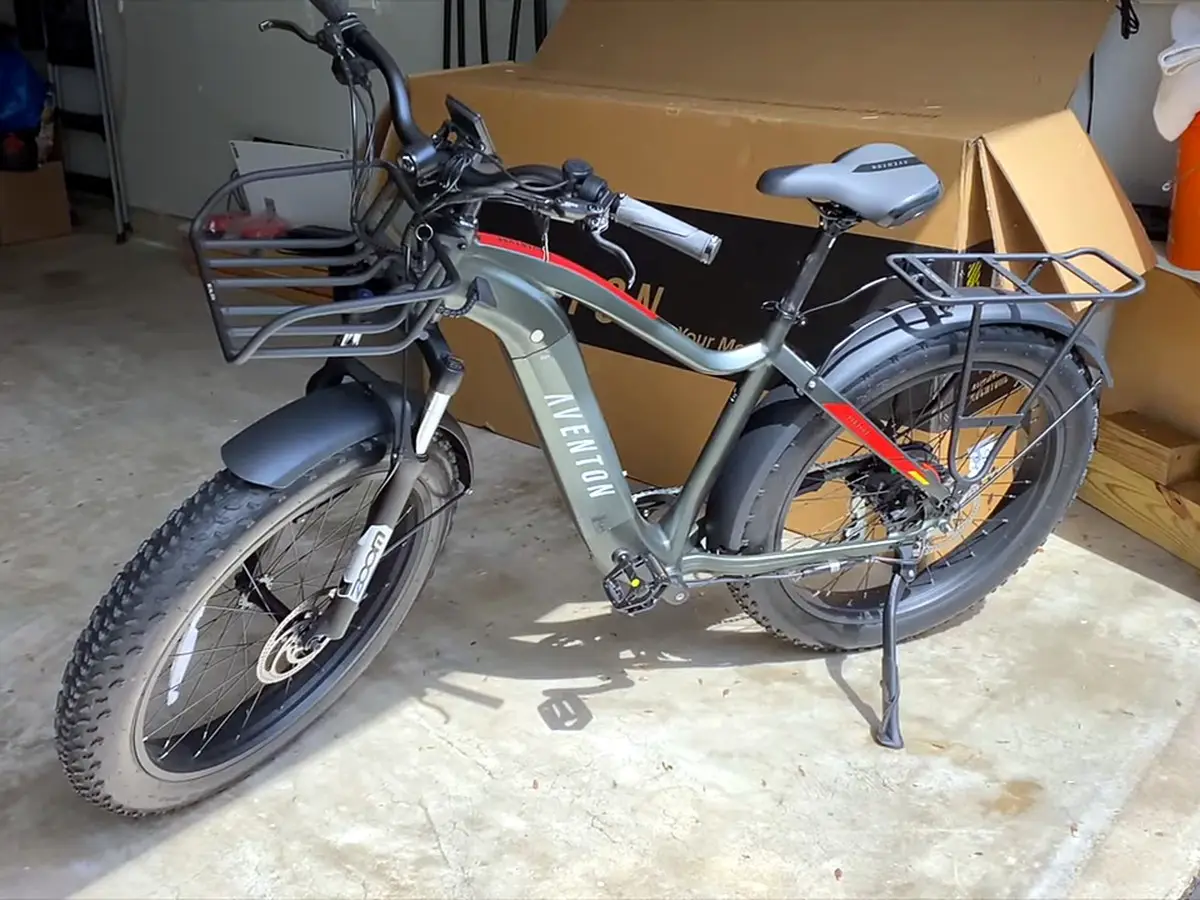
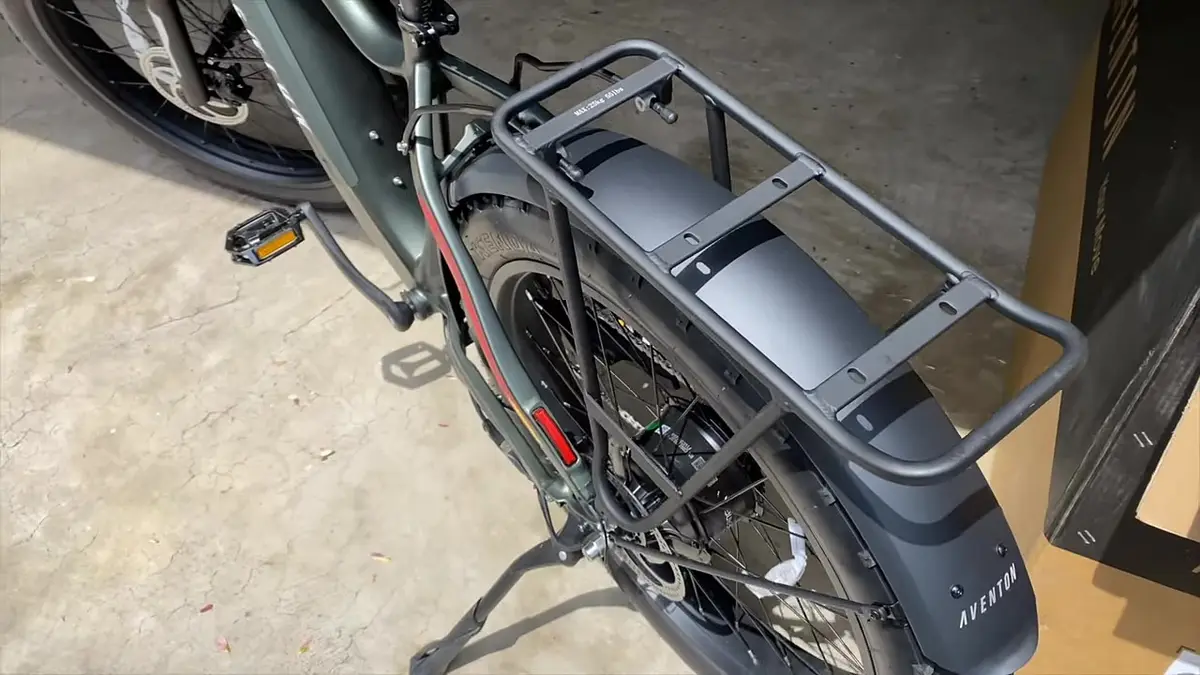
Everything on my bike came standard, including the front and rear fenders and a pretty heavy-duty rear cargo rack. Many of you wrote in to say your bikes didn’t include racks and that Aventon sold them separately. One viewer said the front rack was $45 and the rear $55. I can only tell you what came on mine, so check the listing for the bike you’re buying.
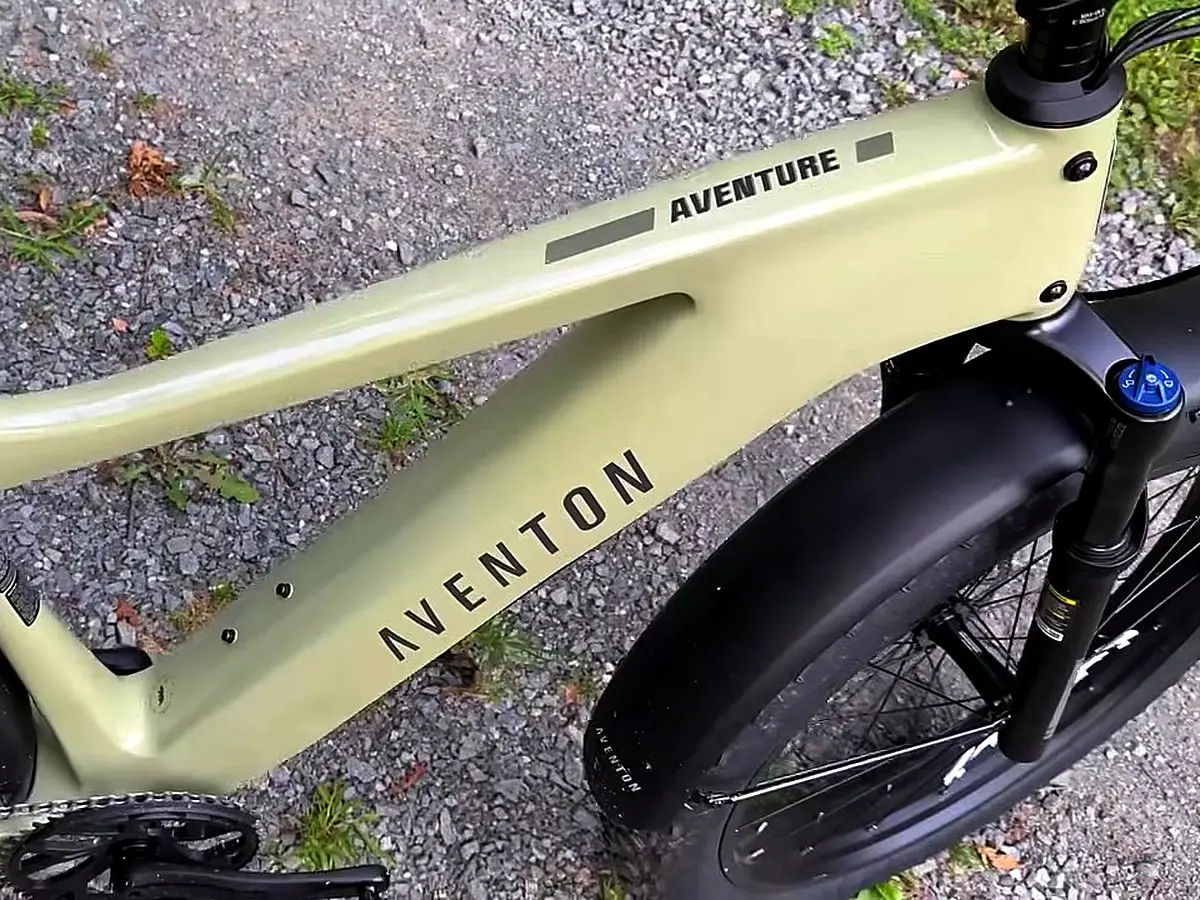
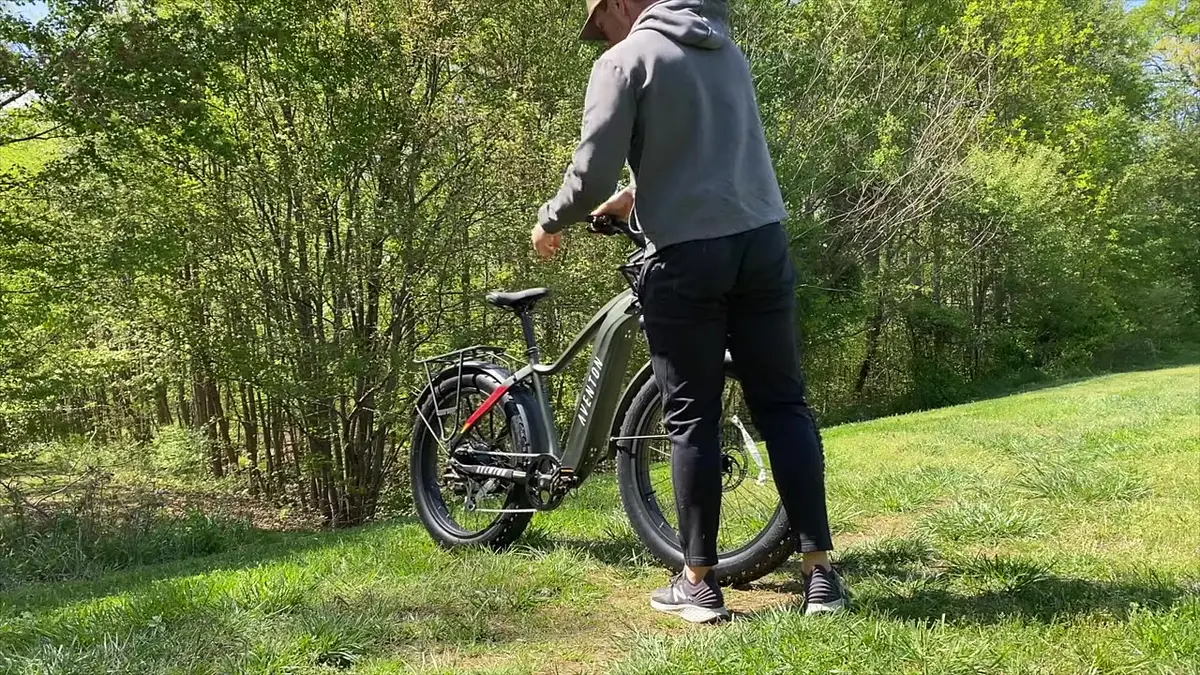
I love the frame shape and the curves. The green paint is the best color I’ve had on an e-bike. If you have the choice, get the green over the black. It looks beautiful in person.
Aventure vs Aventure 3
The question I get most is how the original compares with the bike that replaced it. Here’s the comparison using Aventon’s own numbers, plus my range result for the original.
| Aventure (1st gen) | Aventure 3 | |
|---|---|---|
| Motor, sustained (W) | 750 | 750 |
| Motor, peak (W) | 1,130 | 1,440 |
| Battery (V) | 48 | 36 |
| Battery (Wh) | 720 | 733 |
| Rated range (mi) | 45 | 65 |
| My range result, PAS 5 (mi) | 41 | Not listed |
| Fork travel (mm) | 80 | 80 |
| Suspension seatpost (mm) | Not listed | 50 |
| Tires (in) | 26 x 4 | 26 x 4 |
| Weight (lbs) | 73 | 76 |
| Payload (lbs) | 300 | 400 |
| Price as of Oct 22, 2026 (USD) | Not listed | 1,999 |
Sources: Aventon’s archived 2021 Aventure page and Aventon’s current Aventure 3 page. The Aventure 3’s peak figure is its Boost mode. The Aventure is IPX4 and the Aventure 3 is IPX5.
The newer bike adds a torque sensor, a suspension seatpost, a higher weight limit and app features like a wheel lock. The original runs a 48V system and weighs 3 lbs less. When I reviewed the Aventure 3, I ranked it above every other e-bike I’d tested. If the used price on an original isn’t well below $1,999, the newer bike is the better buy.
Other bikes to compare
These are bikes I’ve reviewed myself. Numbers are from each maker’s page as listed in those reviews.
| Aventure (1st gen) | Bee Cool Adventurer | Mokwheel Obsidian | Aventure M | |
|---|---|---|---|---|
| Motor | 750W hub | 750W hub | 750W hub | 250W mid-drive |
| Battery (Wh) | 720 | Not listed | 940 | 733 |
| Rear suspension | No | Yes | Yes | No |
| Throttle | Yes | Yes | Yes | Sold separately |
| Weight (lbs) | 73 | 78 | 77 | 73 |
| Price as of Oct 22, 2026 (USD) | Not listed | 1,099 | 1,799.99 | 2,899 |
The Bee Cool battery is listed as 48V 21Ah. The Aventure M motor peaks at 750W.
- Bee Cool Adventurer. In that review I compared it to this bike directly. The Adventurer has dual suspension and the Aventure doesn’t, and when I reviewed it, the Adventurer cost less. Its fork is cheaper, though, and I bottomed it out.
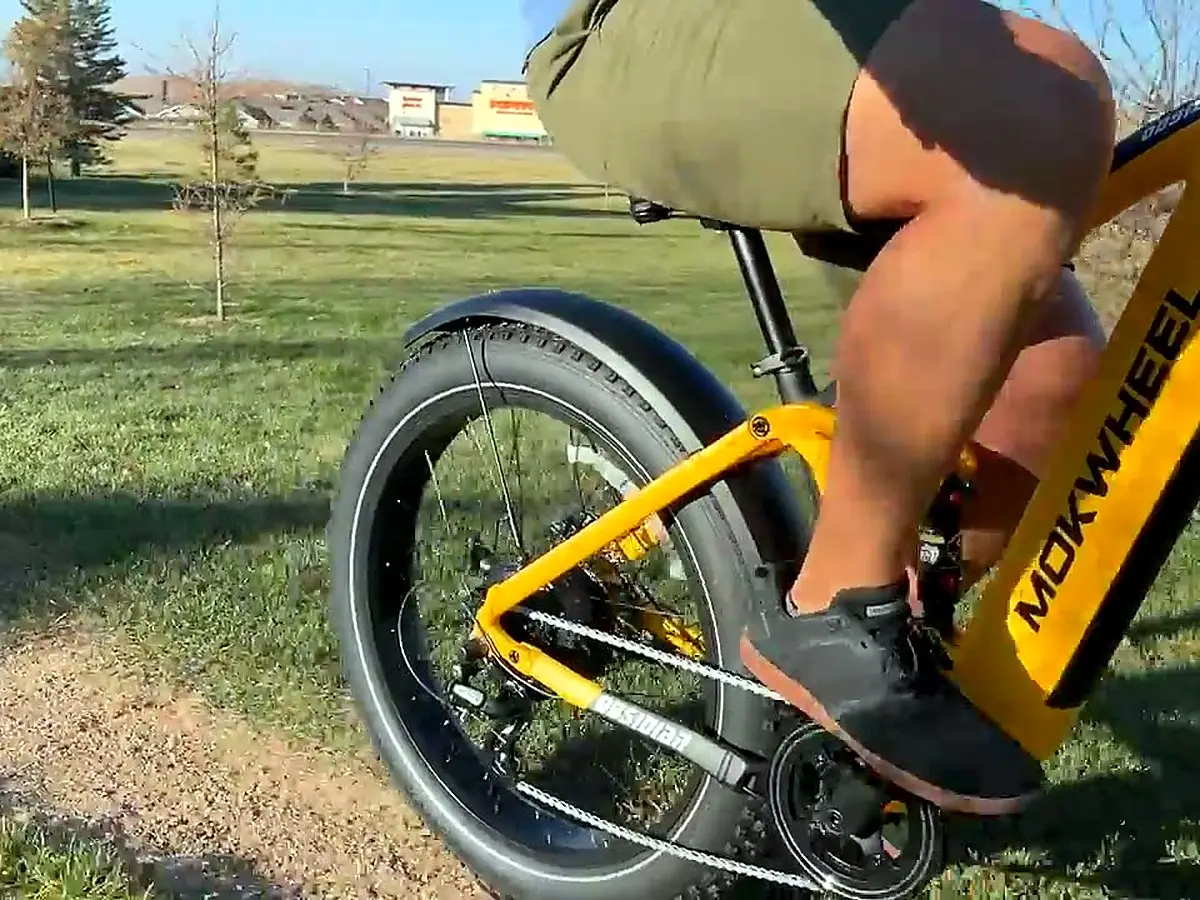
- Mokwheel Obsidian. Full suspension and a bigger battery, for a few pounds more weight.
- Aventure M. Aventon’s mid-drive fat tire bike. It’s Class 1, the throttle is sold separately, and it costs a lot more.
Pros and cons
Pros
- Comfortable on dirt trails without a rear shock, and comfortable on the street
- 41 miles on PAS 5 with hills and off-road riding, close to Aventon’s 45 mile average
- Throttle works from a stop
- Fenders, rack and lights came on my bike
- Brake-activated tail light
- Speed limit adjustable on the display (on my unit)
- Removable battery for charging at work
- The green paint
Cons
- The price was the one thing I didn’t love. It was about $1,900 when I reviewed it, though that’s reasonable next to bikes with the same battery and motor size
- 73 lbs is a lot to lift
- Assembly is hard if you skip the tutorial
- Racks weren’t standard on every unit, according to many viewers
- Discontinued, so no new warranty
FAQ
How far does the Aventon Aventure go on a charge? I got 41 miles on PAS 5 on hills and dirt. Aventon listed a 45 mile average. Some viewers reported much less on PAS 5, so expect your result to depend on rider, route and how hard you pedal.
Does the throttle work from zero? Yes. You can start from a stop on the throttle alone.
What sizes did it come in? Three frame sizes, which Aventon says fit riders from 5’1” to 6’4”. If you’re between sizes, check Aventon’s size chart before you buy a used one.
Will it fit a 4’11” rider? That’s below Aventon’s published range of 5’1” and up, so I wouldn’t count on it.
Can I unlock it to 28 mph? Aventon says it can be set up as a Class 3, which raises the pedal assist speed limit. Their page doesn’t say the throttle goes faster.
Do I need the app to change the speed limit? On my bike I changed it right from the display. One viewer had to use the app on theirs, so it may depend on the unit.
Do the racks come with it? My bike came with fenders and a rear rack. Many viewers said theirs didn’t, so confirm with the seller.
Is it waterproof? It’s rated IPX4. Rain and puddles are fine. Don’t submerge it.
Is it good for a rainy climate? For riding in rain, yes, based on the IPX4 rating. Dry it off afterward and don’t pressure wash it.
How long does it take to charge? Aventon lists 4 to 5 hours on the included 48V 3A charger.
How heavy is it? 73 lbs. It doesn’t feel that heavy when you ride, but plan for the weight when you lift it.
Should I get the Aventure or the Aventon Level? For mostly dirt and mixed riding, the Aventure, because the fat tires and fork made trails comfortable. I rode the Level close to 400 miles and liked it a lot. I haven’t tested them back to back, so I can’t give you a head-to-head result.
Is the original Aventure still sold new? No. As of Oct 22, 2026, Aventon’s link for it redirects to the Aventure 3.
Price
When I reviewed it, the Aventure cost about $1,900. Aventon’s archived 2021 listing shows $1,999. As of Oct 22, 2026, it’s discontinued, and the replacement Aventure 3 is $1,999 on Aventon’s site. A used original only makes sense at a clear discount from that price.
See the Aventure 3 at Aventon (affiliate link). It’s the current replacement for this bike.
Final thoughts
This bike is fully capable off road and still comfortable on the street, and when I made the video it was the best e-bike I had tested. Aventon uses good parts, so I wasn’t worried about the motor or parts failing, and I planned to keep riding it. Today, buy one used only at a clear discount, or go with the Aventure 3.