ALL Electric
In the full review (8 sections)
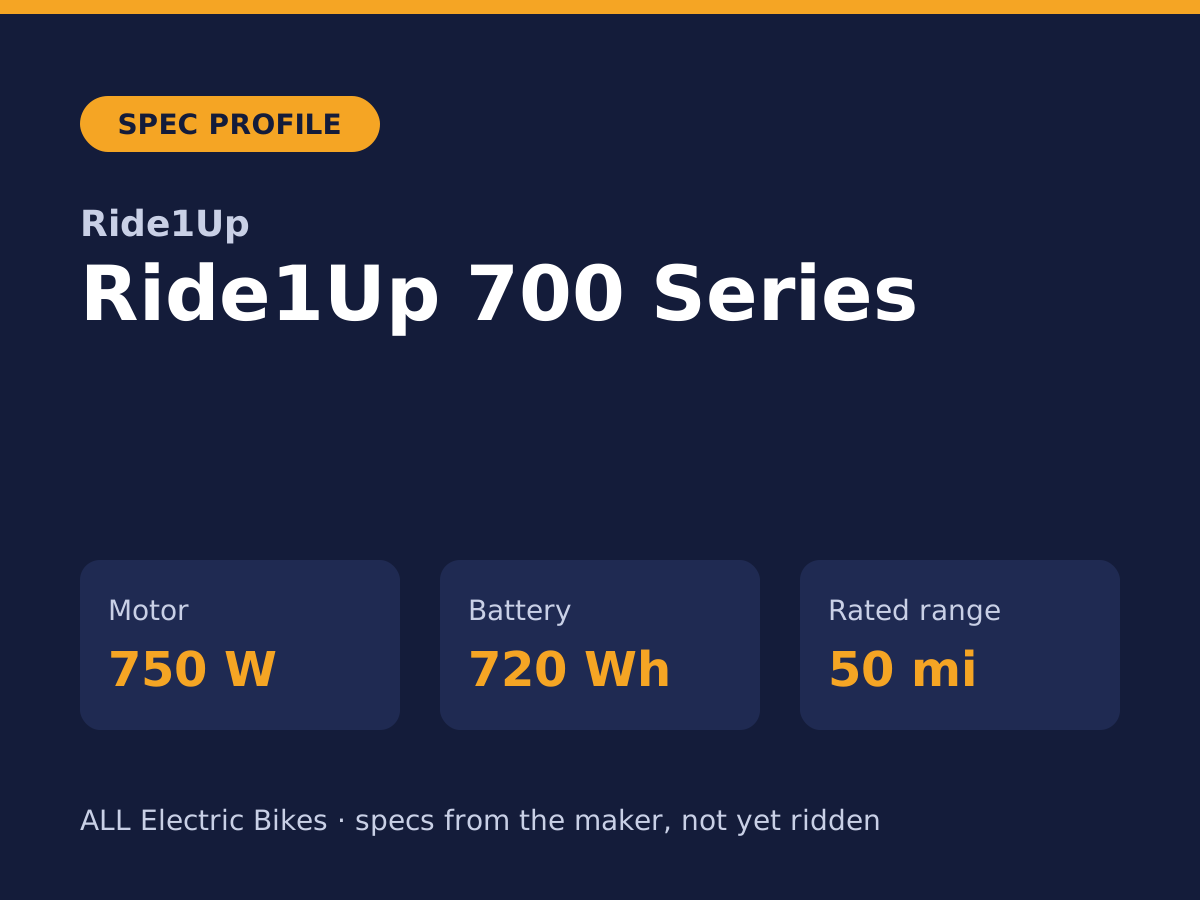
I haven’t ridden the Ride1Up 700 Series yet. This profile is built only from Ride1Up’s official spec page, checked Oct 23, 2026. Nothing below is a riding impression. When I film it, the tested review will replace this page.
Should you buy one?
On paper, the 700 Series is a full-size commuter with the parts list of a more expensive bike. It has a 750W sustained hub motor, a 48V 15Ah battery, a 100mm hydraulic-lockout fork, Tektro hydraulic brakes on 180mm rotors and Schwalbe Super Moto-X tires. Ride1Up lists it as Class 2-3, with 28 mph on pedal assist and 20 mph on the throttle.
If you want a commuter for pavement and light gravel and you care about speed and stopping power, the spec sheet lines up well. If you want a torque sensor, note that Ride1Up lists a current-based cadence sensor (R1CBC) on this bike, not a torque sensor.
Price: $1,595 on ride1up.com as of Oct 23, 2026.
Quick specs
These come from Ride1Up’s 700 Series page, checked Oct 23, 2026.
| Spec | 700 Series |
|---|---|
| Motor, sustained (W) | 750 |
| Battery (V) | 48 |
| Battery (Ah) | 15 |
| Battery (Wh, 48 x 15) | 720 |
| Rated range (mi) | 30-50 |
| Pedal assist top speed (mph) | 28 |
| Throttle top speed (mph) | 20 |
| Fork travel (mm) | 100 |
| Brake rotors (mm) | 180 |
| Tires (in) | 27.5 x 2.4 |
| Gears | 8 |
| Rear rack rating (lb) | 50 |
| Weight (lb) | 62 |
| Weight capacity (lb) | 300 |
| Price (USD, Oct 23, 2026) | 1,595 |
Sources: Ride1Up 700 Series spec page. The Wh figure is my arithmetic from the listed volts and amp hours. Ride1Up’s FAQ on the same page mentions a 14Ah pack as the largest that fits the frame, which conflicts with the 15Ah in the spec table, so check with Ride1Up before you buy.
What the specs mean on the road
750W sustained hub motor. “Sustained” means the motor is rated to hold that output, not just hit it for a moment. A geared rear hub like this one is simple and low maintenance. It pushes you along without loading the chain the way a mid-drive does.
48V 15Ah battery (about 720Wh). Watt hours are the size of the fuel tank. 720Wh is in the same range as most full-size commuters I’ve tested. Ride1Up’s 30-50 mile range is a rated figure that depends on rider weight, hills and assist level. Riding at 28 mph uses far more energy than 20 mph, so expect the low end of that range if you ride fast.
Class 2-3. Out of the box it can do 28 mph on pedal assist, which puts it in Class 3 territory. Class 3 bikes are restricted from some multi-use paths in many states. See my Class 2 vs Class 3 guide before you pick a setting.
Cadence-based pedal assist. A cadence sensor turns the motor on when the cranks spin, without measuring how hard you push. It’s simpler and many riders like that the motor does the work. A torque sensor scales power to your effort and usually feels more like a regular bike.
100mm hydraulic-lockout fork. 100mm is more travel than the 65 to 80mm forks on most commuters I’ve reviewed. The lockout lets you firm it up on smooth pavement so you don’t bob when you stand.
Hydraulic brakes, 180mm rotors. Hydraulic brakes need less hand force than cable discs and don’t need cable tension adjustments. Larger rotors shed heat better, which matters on a bike that can reach 28 mph.
27.5 x 2.4 in tires. That’s a big-wheel, mid-width tire. Bigger wheels roll over cracks and potholes more easily than 20 inch wheels. The 2.4 inch width adds cushion without the drag of a 4 inch fat tire.
62 lb, 300 lb capacity. 62 lb is typical for a full-size e-bike with a big battery. The 300 lb capacity covers rider plus cargo. The rear rack is rated for 50 lb, so it’s a commuter rack, not a passenger rack.
How it compares to bikes I’ve tested
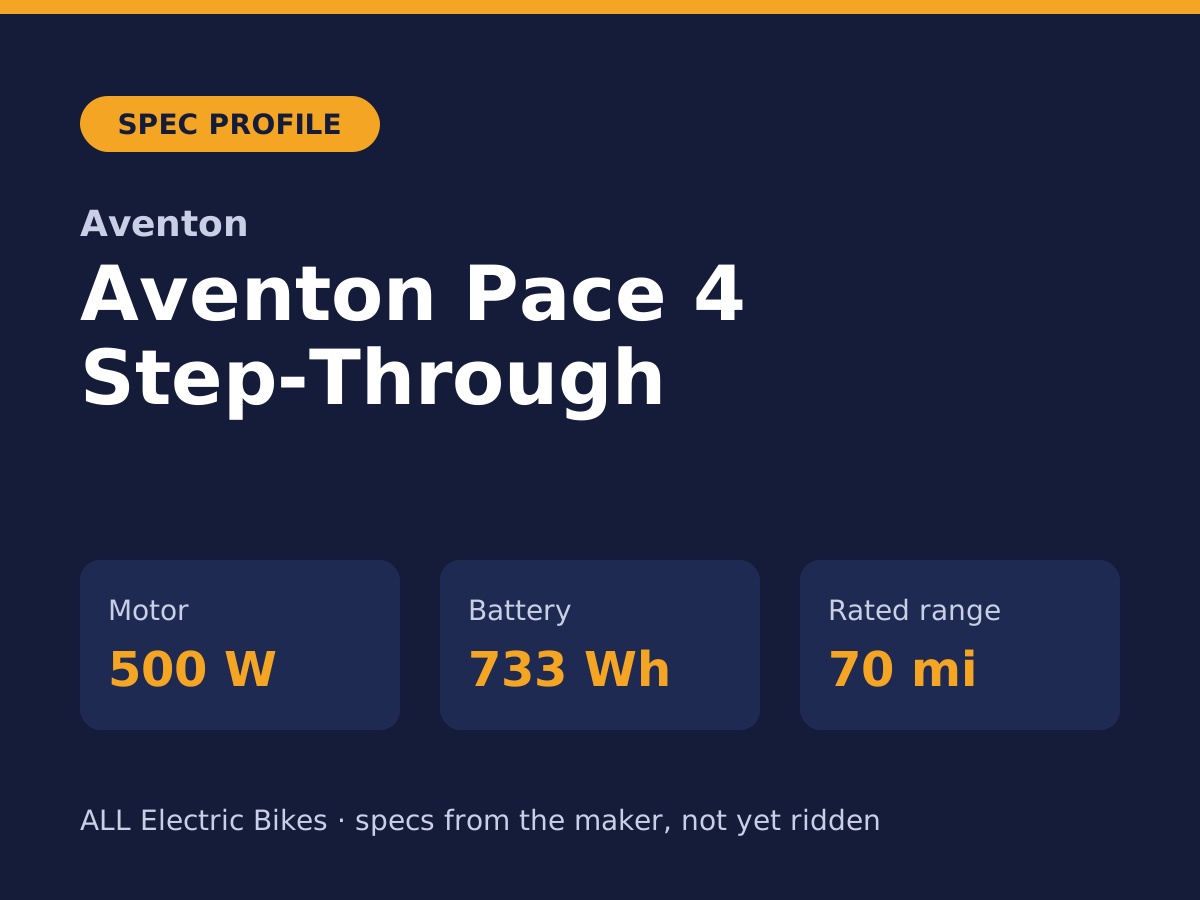
- Aventon Level.2: Aventon lists 500W sustained, 750W peak, a 48V 14Ah (672Wh) battery, a 65mm fork and 62 lb. The 700 Series lists a higher sustained motor rating, a slightly bigger battery and a longer-travel fork at the same weight. The Level.2 has a torque sensor; the 700 Series has a cadence-based system.
- Aventon Level 3: 500W sustained, 733Wh and 67 lb per Aventon, with an 80mm fork and a 60 lb rack. The Level 3 has the larger battery. The 700 Series is 5 lb lighter on paper and rated for more sustained motor power.
- Velotric Discover 1: 500W, 692Wh and 180mm hydraulic discs per Velotric, with an 80mm fork and 26 x 2.5 in tires. The two are close on battery and brakes. The 700 Series lists a 28 mph assist top speed and bigger wheels.
None of these comparisons are ride impressions of the 700 Series. They compare published numbers against bikes I have ridden.
Who it’s for
- Commuters who want 28 mph assist and hydraulic brakes for around $1,600
- Riders who ride mostly pavement with some gravel and want a longer-travel fork
- Riders between 5’5” and 6’4” (XR frame) or 5’0” and 6’2” (ST frame), per Ride1Up
Who should skip it
- Anyone who needs to carry a passenger or heavy cargo: the rack is rated for 50 lb
- Riders who want a torque sensor
- Riders who mostly use multi-use paths where Class 3 isn’t allowed, unless you plan to keep it at 20 mph
Price and where to buy
As of Oct 23, 2026, Ride1Up lists the 700 Series at $1,595 on its own site, with free shipping to the contiguous US. I don’t have an affiliate link for Ride1Up.